
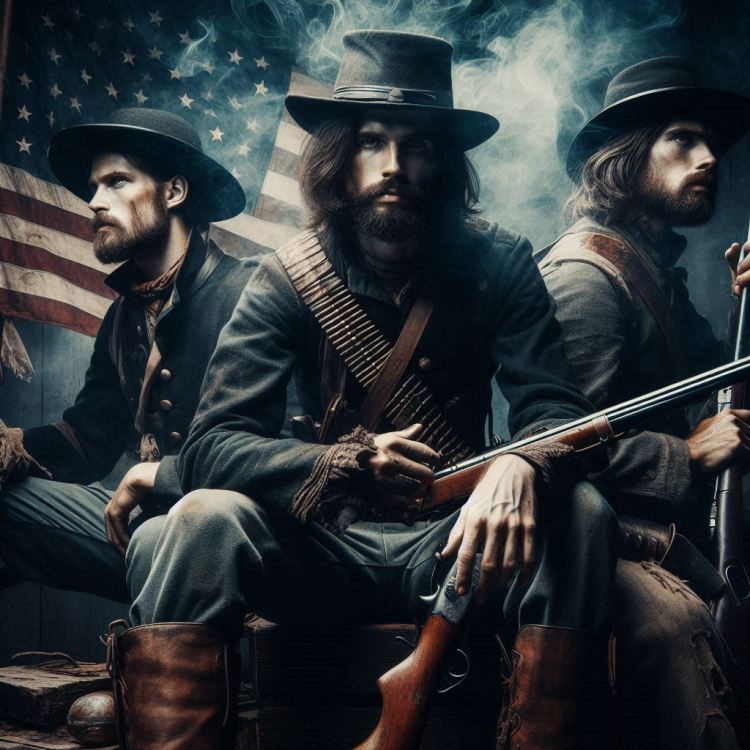
The U.S. Civil War (1861–1865) is often celebrated as a moral triumph—a righteous struggle to end the abhorrent institution of slavery. And indeed, the abolition of slavery was a monumental and necessary step toward justice and human dignity. However, the full story of the Civil War is much darker and more complex. While ending slavery was undeniably a good thing, the war was also driven by hidden economic and political agendas that reshaped America in ways that benefited the powerful at the expense of the vulnerable. This article delves into the idea that the Civil War was not just a moral crusade but also a calculated effort by Northern industrialists and politicians to transform the U.S. economy into a modern capitalist system—a system that, while ending slavery, created new forms of exploitation and inequality.
### **The Moral Facade: Slavery as a Public Justification**
On the surface, the Civil War was about ending slavery. The North, led by President Abraham Lincoln and the Republican Party, framed the conflict as a fight for freedom and human dignity. Abolitionists—activists who campaigned to end slavery—played a significant role in shaping this narrative. Their moral arguments were genuine and powerful, and the abolition of slavery was a historic achievement. However, these moral arguments also served as a convenient **public justification** for deeper economic and political agendas.
#### **Key Term: Abolitionists**
Abolitionists were individuals and groups who fought to end slavery. They argued that slavery was morally wrong and violated the principles of freedom and equality. Famous abolitionists included Frederick Douglass, Harriet Beecher Stowe, and John Brown.
—
### **The Darker Truth: Economic Reengineering of America**
Behind the moral facade, the Civil War was about reshaping the U.S. economy. The North, with its growing industrial base, saw slavery as an obstacle to progress. While ending slavery was a moral victory, it also served as a tool for economic transformation—a transformation that came at a cost.
#### **1. The Homestead Act (1862): Undermining the South, Exploiting the West**
The **Homestead Act** was a law passed during the Civil War that provided 160 acres of free land to settlers willing to farm it. On the surface, it was about encouraging westward expansion and rewarding hardworking Americans. But it also had a hidden purpose: to undermine the Southern plantation system and exploit the West for economic gain.
– **How It Worked**: The act allowed small farmers to claim land in the West, creating a class of independent landowners. This was in direct contrast to the Southern model, where large plantations relied on enslaved labor to grow cash crops like cotton.
– **The Dark Side**: While the Homestead Act promised opportunity, it often led to the displacement of Native Americans, who were forced off their lands to make way for settlers. Additionally, many homesteaders struggled to succeed, as the land was often difficult to farm.
#### **Key Term: Plantation System**
The plantation system was an agricultural model used in the South, where large farms (plantations) grew cash crops like cotton, tobacco, and sugar. These plantations relied on enslaved labor and were owned by a small elite class.
—
#### **2. Slaves as Non-Consumers: Building a Capitalist Economy**
One of the key reasons Northern industrialists wanted to end slavery was that enslaved people were not consumers. In a capitalist economy, consumers are essential because they buy goods and services, driving economic growth.
– **The Problem with Slavery**: Enslaved people did not earn wages and therefore could not participate in the market economy. This limited the growth of industries that relied on consumer demand.
– **The Solution: Free Labor**: By abolishing slavery and creating a free labor system, the North could build a class of wage-earning workers who would spend their money on goods, fueling the growth of factories and businesses.
– **The Dark Side**: While free labor was an improvement over slavery, it often led to exploitative working conditions. Factory workers, including women and children, faced long hours, low wages, and dangerous environments. The rise of industrial capitalism created new forms of inequality and exploitation.
#### **Key Term: Free Labor System**
A free labor system is an economic model where workers are paid wages for their work. Unlike slavery, workers have the freedom to choose their jobs and spend their earnings, creating a consumer-driven economy.
—
#### **3. Destruction of the Southern Economy: Economic Subjugation**
The Civil War devastated the Southern economy, which was built on slavery and agriculture. By destroying the South’s economic system, the North ensured that the region would be reintegrated into the national economy on Northern terms.
– **Economic Subjugation**: After the war, Northern capitalists invested in Southern industries, railroads, and infrastructure, but on terms that benefited the North. The South became a source of cheap raw materials (like cotton) for Northern factories and a market for Northern goods.
– **The Dark Side**: The South remained an economic backwater for decades, and many formerly enslaved people were trapped in systems of sharecropping and tenant farming, which kept them in cycles of poverty and debt.
#### **Key Term: Sharecropping**
Sharecropping was a system where landowners allowed tenants to use their land in exchange for a share of the crops. While it gave tenants some independence, it often kept them in poverty due to high costs and unfair contracts.
—
#### **4. Railroads and Industrial Expansion: Connecting Markets, Exploiting Labor**
The North’s industrialists had a vested interest in expanding railroads across the country. The war provided an opportunity to push through legislation like the **Pacific Railway Acts**, which funded the construction of the **Transcontinental Railroad**.
– **Economic Benefits**: Railroads connected markets, opened up the West for settlement, and facilitated the movement of goods and people. This expansion was essential for the growth of the industrial economy.
– **The Dark Side**: The construction of railroads relied heavily on exploited labor, including Chinese immigrants and Irish workers, who faced dangerous conditions and low pay. Additionally, the railroads often displaced Native American communities and contributed to the destruction of their way of life.
#### **Key Term: Transcontinental Railroad**
The Transcontinental Railroad was a railway line that connected the East Coast to the West Coast. It was completed in 1869 and played a crucial role in the economic development of the United States.
—
### **Foreign Influence: Aligning with Global Capitalism**
The North’s economic agenda was not just a domestic effort; it was also influenced by global trends. Britain, the world’s leading industrial power, had abolished slavery in 1833 and was increasingly reliant on wage labor. British industrialists may have quietly supported the North’s efforts to end slavery, as it aligned with their vision of a global capitalist economy.
– **British Abolitionism**: Britain had a strong abolitionist movement and used its influence to pressure other countries, including the U.S., to end slavery.
– **Economic Pressure**: By undermining the Southern cotton monopoly, Britain could diversify its cotton sources and reduce its dependence on the U.S. South.
—
### **The Aftermath: A New Economic Order with New Inequalities**
The Civil War and the abolition of slavery laid the foundation for a new economic order in the United States. With the South’s economy in ruins, the North emerged as the dominant force in the national economy. The transition to a free labor system created a class of wage-earning consumers who fueled the growth of the industrial economy.
– **Rise of Consumer Capitalism**: The post-war period saw the rise of consumer capitalism, where economic growth was driven by consumer demand for goods and services.
– **The Gilded Age**: The late 19th century, known as the Gilded Age, was marked by rapid industrialization, economic growth, and the rise of powerful industrialists like John D. Rockefeller and Andrew Carnegie. However, this era was also characterized by stark wealth inequality, labor exploitation, and political corruption.
#### **Key Term: Gilded Age**
The Gilded Age (1870s–1900) was a period of rapid economic growth and industrialization in the United States. It was characterized by the rise of big business, wealth inequality, and political corruption.
—
### **Conclusion: A War of Economics, Not Just Morals**
While the Civil War was undoubtedly a moral struggle to end slavery, it was also a calculated effort to reshape the U.S. economy. The Homestead Act, the destruction of the Southern economy, and the creation of a consumer base were all part of a larger plan to build a modern capitalist system. By framing the war as a fight for freedom, the North was able to justify its economic agenda and secure its dominance in the post-war era.
The abolition of slavery was a moral victory, but the truth is much darker. The war and its aftermath created new forms of exploitation and inequality, from the displacement of Native Americans to the rise of industrial capitalism and the exploitation of workers. The Civil War was not just a fight for freedom—it was also a battle for economic power, and its legacy is a complex mix of progress and pain.

